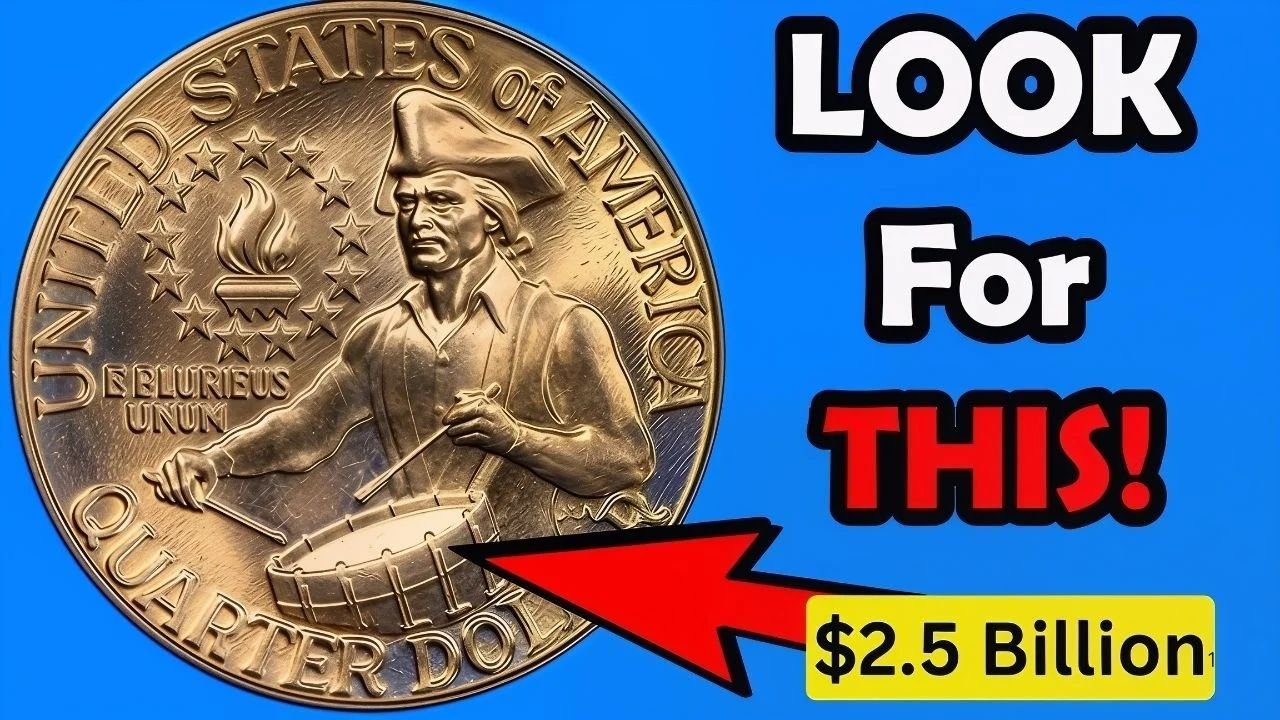
If you’ve ever spotted a quarter with a Colonial drummer on the back, you might have wondered if it’s worth more than 25 cents. The 1976 Bicentennial Quarters, minted to celebrate America’s 200th anniversary, are not just coins—they’re pieces of history. While most remain in circulation at face value, some rare variations, silver editions, and mint errors can fetch hundreds or even thousands of dollars.
Here’s a concise guide to the most valuable 1976 Bicentennial Quarters still out there, and tips on identifying them.
History of the 1976 Bicentennial Quarter

To honor the U.S. Bicentennial, the Mint introduced a special quarter design featuring a Colonial drummer and a torch of freedom. Every coin carries the dual date “1776–1976,” and interestingly, no 1975 quarters were minted—the production skipped straight to 1976. Coins were made at Philadelphia (no mintmark), Denver (D), and San Francisco (S) with copper-nickel clad versions and 40% silver editions.
While millions were produced, only a few survive in pristine condition or with unique mint errors, making them highly sought after by collectors today.
Why Some 1976 Quarters Are Highly Collectible
Collectors treasure these coins for a few reasons:
- Historical significance: Celebrates 200 years of U.S. independence.
- Silver content: San Francisco-minted 40% silver versions are rare and valuable.
- Minting errors: Double dies, off-center strikes, and missing layers create rarity.
- High-grade condition: Coins in MS67 or higher grades are scarce and command premium prices.
Most Valuable 1976 Bicentennial Quarters

Here’s a breakdown of the top collectible types:
1. 1976-S Silver Proof Quarter
- Mintmark: S
- Metal: 40% Silver
- Value: $50–$3,000+ depending on grade
- Tip: Check the edge for solid silver; proofs have a mirror-like finish.
2. 1976-S Silver Uncirculated (Business Strike)
- Mintmark: S
- Metal: 40% Silver
- Value: $25–$500+
- Tip: Often found in old coin jars or collections.
3. 1976-D Bicentennial Quarter (High Grade)
- Mintmark: D
- Value: $200–$1,200+ for MS67+ coins
- Tip: Circulated examples are common, but flawless ones are rare.
4. 1976 Philadelphia (No Mintmark) High-Grade
- Value: Up to $1,000+ for perfect coins
- Tip: High-grade coins are scarce despite being the most common type.
5. Double-Die Obverse Error (DDO)
- Value: $300–$5,000+
- Tip: Look for doubling in “IN GOD WE TRUST” or “1776–1976.”
6. Missing Clad Layer Error
- Value: $750–$4,000+
- Tip: Copper-colored instead of silvery gray.
7. Off-Center Strike
- Value: $150–$1,500+
- Tip: The more off-center, the higher the value if the date is still visible.
How to Identify Silver Bicentennial Quarters
- Edge: Solid silver edges indicate a silver coin; copper-nickel shows a copper stripe.
- Weight: Silver ~5.75 grams; regular ~5.67 grams.
- Mintmark: Only “S” mintmark coins contain silver.
Quick Value Table
| Type | Metal | Mint | Approx. Value |
|---|---|---|---|
| Silver Proof | 40% Silver | S | $50–$3,000+ |
| Silver Uncirculated | 40% Silver | S | $25–$500+ |
| Philadelphia (High Grade) | Clad | P | Up to $1,000+ |
| Denver (High Grade) | Clad | D | $200–$1,200+ |
| Double-Die Error | Clad | P/D | $300–$5,000+ |
| Missing Clad Layer | Error | P/D | $750–$4,000+ |
| Off-Center Strike | Error | P/D | $150–$1,500+ |
FAQs
Q1. Are most Bicentennial quarters valuable?
No, most are worth 25 cents. Only rare silver, errors, or high-grade coins have significant value.
Q2. How can I tell if my quarter is silver?
Check the edge for solid silver and the “S” mintmark.

Q3. Should I get my quarter professionally graded?
Yes, especially if it appears uncirculated or has an error—it can boost resale value.
Q4. What does “proof” mean?
Proof coins are specially struck with polished dies for a mirror-like finish, intended for collectors.
Q5. Can valuable quarters still appear in change?
Rarely, but silver versions or mint errors occasionally turn up in old coin jars, rolls, or collections.
Conclusion
The 1976 Bicentennial Quarters are more than pocket change—they’re pieces of American history. While most are common, silver editions, mint errors, and high-grade coins can be worth a small fortune. Next time you check your spare change or inherit an old coin collection, take a closer look—you might just discover a hidden treasure.